

When flexibility matters more than ownership
For decades, owning equipment has been regarded as a sign of operational strength for mining, construction and industrial businesses. A company that owns its access platforms, lifting equipment, forklifts or material-handling machinery has direct control over its assets and can deploy them whenever required.
But project requirements are becoming harder to predict as a mine may need one type of machine for a particular phase of a project and a completely different capability when conditions change. In this environment, the question is no longer simply whether a business can afford to own equipment, but whether ownership gives it the flexibility it needs.
That is one of the central issues raised by Darryn Jacobs, Managing Director at SkyJacks, during Electra Mining 2026. He argues that businesses should increasingly consider access to equipment rather than ownership of equipment as the more practical model.
“Today you have a project that requires the 626. Tomorrow you have another project that requires a different machine,” Jacobs explained during the interview. “So why own it? Because you can rent it from us.”
The argument is particularly relevant in industries where project scopes can shift rapidly. Purchasing a machine commits capital to a specific capability, even when that capability may not remain necessary throughout the asset’s useful life.
Rental turns equipment into a flexible resource
Rental offers a different approach as instead of tying capital up in machines that may spend significant periods underutilised, companies can bring equipment into their operations when it is needed and return or replace it as requirements change.
SkyJacks offers both short-term and long-term rental and leasing arrangements, allowing customers to select equipment according to the duration and demands of a project.
“For instance, a project may begin with a requirement for a 20-metre access machine but later require a machine capable of reaching 40 metres,” says Jacobs.
Under a rental model, the first machine can be returned and replaced with equipment suited to the new requirement rather than leaving the customer with an asset that no longer matches the job.
That flexibility can be particularly valuable in mining, where specialised equipment may be needed for a specific construction, maintenance, rehabilitation or underground activity rather than continuously.
The cost of ownership goes beyond the purchase price
 The financial case for rental also extends beyond the initial capital outlay. Equipment ownership brings ongoing responsibilities for servicing, maintenance, repairs and, eventually, replacement.
“Another reason rental is becoming attractive is because customers are looking for predictable costs and reliable uptime,” he says, adding that rental provides professionally maintained equipment without the additional burden of maintenance, repairs and replacement costs.
For businesses managing multiple projects, this can make budgeting easier while reducing the risk of carrying underutilised assets between contracts.
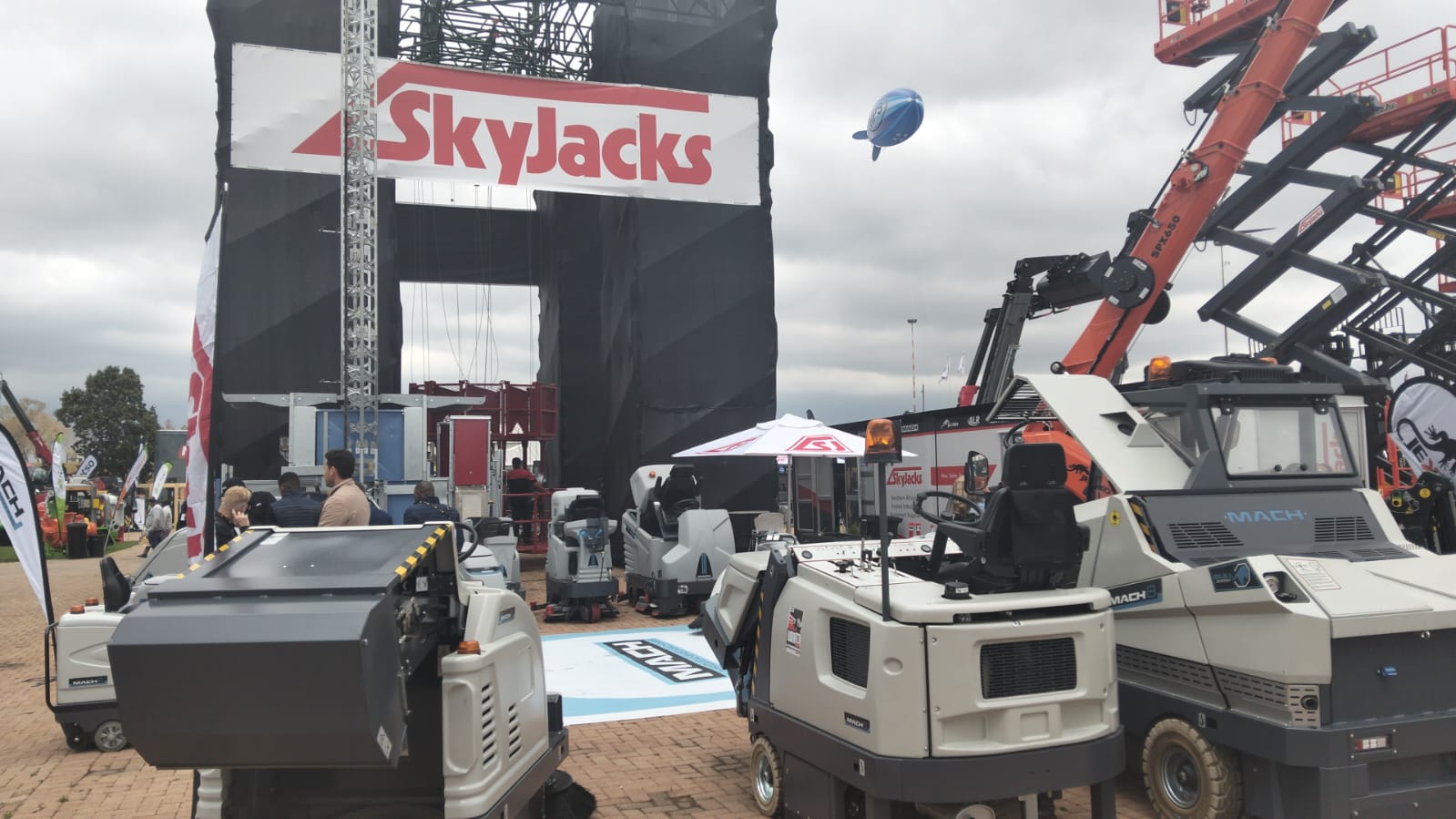
The model can also provide access to a broader equipment fleet. SkyJacks’ offering spans powered access, lifting, material handling and industrial cleaning equipment, with newer additions including Hyundai forklifts and MACH cleaning solutions.
Specialist equipment without permanent commitment
Rental does not necessarily mean choosing from a generic fleet. The Kamoa Copper Mine project, for instance, demonstrates how specialised equipment can be designed around demanding site requirements.
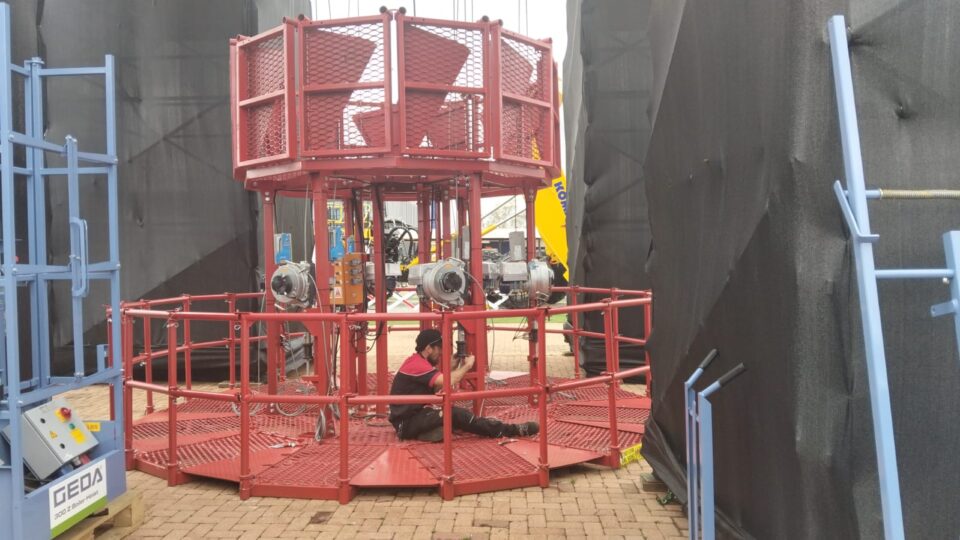
For the DRA project at Kamoa Copper Mine in the Democratic Republic of Congo, SkyJacks designed a 4.9-metre circular suspended platform with a gantry specifically for underground truck-silo repairs.
The platform incorporated ten 1,000 kg hoists, had a safe working load of 4,000 kg and achieved a vertical run exceeding 30 metres.
This illustrates a broader point: the value of an equipment partner is not necessarily confined to supplying an off-the-shelf machine. SkyJacks’ technical team explains that site inspections and engineering assessments can be used to develop solutions for specific applications.
Is ownership finished?
Not necessarily. Ownership remains sensible where equipment is used continuously, utilisation is predictable and the business needs permanent access to a particular machine.
But for companies operating in an environment of changing project scopes, fluctuating workloads and pressure to control capital expenditure, rental increasingly deserves to be considered alongside—and sometimes ahead of—ownership.
As Jacobs puts it, the objective is not to dictate whether customers purchase, finance or rent, but to provide flexibility so they can access the right equipment when and where it is needed.
The shift, therefore, is not simply from buying machines to hiring them. It is from thinking about equipment as an asset that must be owned to thinking about it as a capability that must be available.
For mining and industrial businesses facing faster-changing requirements, that distinction could make rental the smarter model.
