

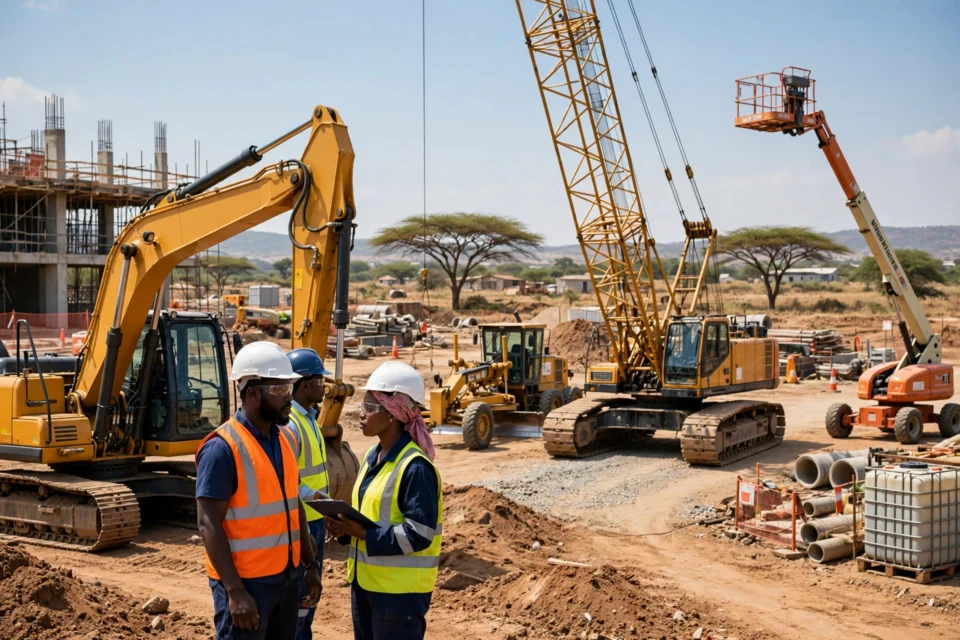
Across Africa, from large-scale infrastructure and mining projects to housing and road corridors, construction projects demand reliable, high-performance equipment. Yet for many contractors, owning a full fleet is no longer the most practical or profitable option. With project needs constantly shifting – from foundation piling and heavy lifting to earthmoving, road construction and working at height – the decision to rent or buy has become a critical business strategy.
Buying Equipment: When Long-Term Ownership Pays Off
For established contractors with a steady pipeline of similar projects, outright purchase can be justified. Ownership guarantees immediate access to machinery and makes sense when utilization rates remain high across multiple sites.But in the African context, ownership carries significant hidden costs. Beyond the initial capital outlay, contractors must factor in maintenance in remote locations, spare parts availability, skilled technicians, insurance, secure storage, inter-site transportation, operator training, depreciation, and eventual replacement. For specialized equipment that may only be used for one phase of a project, these costs can quickly erode profit margins.
Renting Equipment: Flexibility for Africa’s Dynamic Project Landscape
quipment rental is increasingly becoming the smart choice for contractors operating in Africa’s diverse and fast-changing market. It allows companies to access the exact machine required for a specific project phase – without locking up capital.This model is ideal for Africa’s infrastructure boom, where requirements vary from site to site.
- Foundation & Piling Works: Piling rigs and vibro hammers for ports, bridges, and high-rise foundations.
- Lifting & Material Handling: Crawler cranes, all-terrain cranes and truck-mounted cranes for industrial, energy and commercial builds.
- Earthmoving: Excavators, dozers, wheel loaders and skid steer loaders for mining, dam construction and site preparation.
- Road Construction: Motor graders, pavers, soil compactors, tandem rollers and pneumatic tyred rollers (PTR) for Africa’s expanding road and highway networks.
- Concrete Solutions: Self-loading mixers and boom placers for remote sites.
- Working at Height: Telehandlers, scissor lifts, boom lifts and articulated boom lifts for safe and efficient elevated access.
Renting eliminates the burden of long-term maintenance and storage while ensuring access to modern, well-serviced and compliant machines.
5 Key Factors for African Contractors to Consider
- Project Duration & Nature: Short-term, donor-funded, or EPC projects are better suited to rental.
- Utilization Rate: If a machine will sit idle for months between jobs, renting is more economical than owning.
- Capital Preservation: Renting frees up capital for labour, materials, fuel, and other critical project needs – a major advantage for SMEs.
- Maintenance & Logistics: Consider the cost and challenge of servicing equipment in remote or cross-border locations.
- Flexibility & Technology: Rental allows you to select different machines for different applications and access the latest, fuel-efficient models without a huge investment.
The Smart Model: A Hybrid Fleet Approach
There is no single answer for every contractor. Leading construction firms in Africa are now adopting a hybrid model – owning core, high-utilization machines and renting specialized equipment as needed.
This approach offers greater fleet flexibility, improved cash flow, and ensures you always have the right machine for the job, when and where you need it across the continent.
Companies like AGGCON are supporting this shift by providing comprehensive rental solutions – from foundation and heavy lifting to earthmoving, roadwork and aerial access – helping African contractors execute projects more efficiently, control costs, and keep operations moving.
